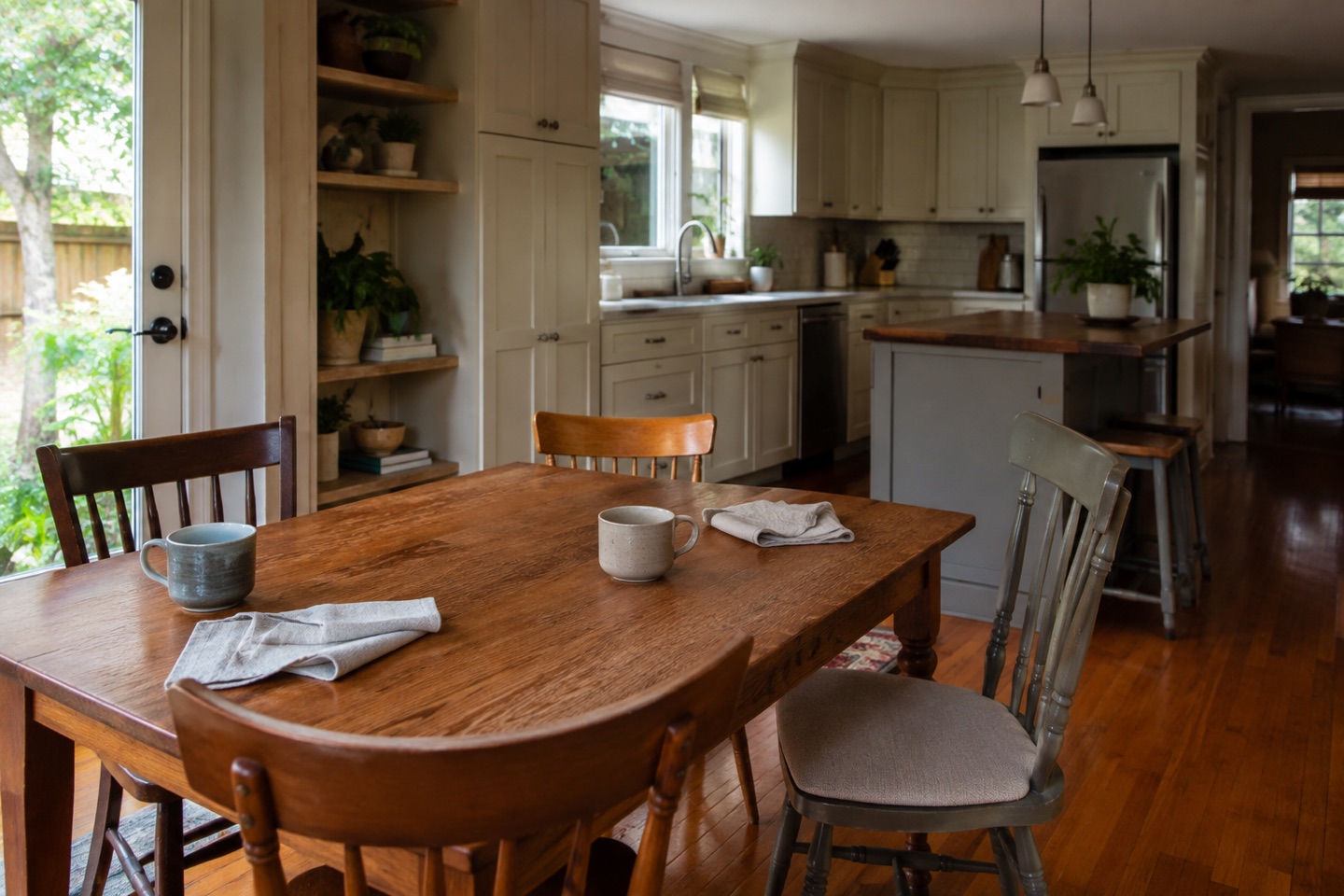
Before you renovate for the next owner, let’s see what is worth doing.
The kitchen has bothered you for years. That does not automatically make replacing it a good selling decision. Before you call a contractor, let’s walk through the house.
Use these as questions for your own home. The examples do not diagnose the condition of the room pictured.
Condition comes first.
A closer look
What needs proper attention?
A door that will not close, evidence of a leak, a loose handrail. A buyer may notice a small symptom and wonder how much else needs work. Have condition and safety concerns assessed by the right professional.
Cosmetic work must never conceal a problem. Discuss disclosure questions with your agent and lawyer.
Help the room make sense.
A closer look
Can a buyer see how the room works?
Move the chair that blocks the door. Clear the counter enough to show the working space. Check the lighting before photographs are booked.
A useful change has a purpose, a cost and a place in the schedule. Painting every room simply because the house is going on the market is not a plan.
Some character is worth keeping.
A closer look
Would replacing it solve the wrong problem?
Good woodwork, a sound older kitchen, a room with a particular charm. Buyers may value things you have grown tired of.
We should consider the competition and the likely buyer before removing character or spending on finishes they may replace again.
The last pass before photographs
What should stay in the picture?
The room does not need to become somewhere you would never live. Once the work is finished, put the supplies away, clear the route through the room and let the space speak for itself. I would rather start there than give you a shopping list.
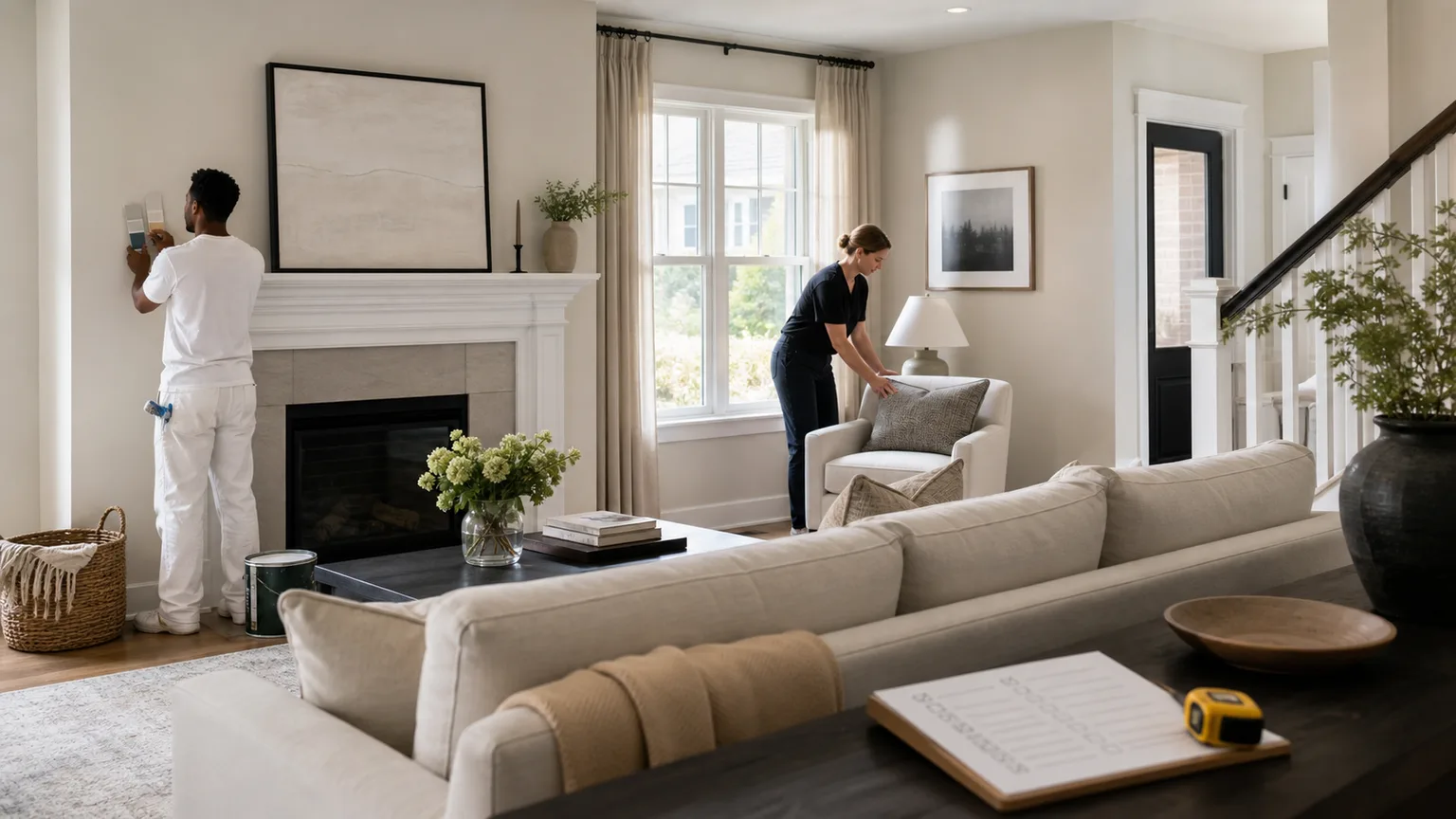
Illustrative preparation example. AI-generated and digitally edited images, not a client property or evidence of a sale result.
Presentation is not a repair. In a real listing, photographs should represent the property's condition accurately, and cosmetic work should never hide a defect.
I would put the proposed work in order, with a budget and a date for photographs. Essential work comes first. Optional work needs a convincing reason to survive the list.
Keep quotations, permits, warranties and records of completed improvements together. They may help answer questions during the sale.
The house also needs to remain liveable. Agree on manageable showing arrangements and a simple reset routine. Nobody should have to wonder where the kettle is for three weeks.
 Condition comes first.